All posts by Cedar Hills Community Church

Letters from Cherith

Letters from Cherith

Have you ever prayed to God and felt as though He was distant? Have you ever prayed for a particular thing, only to feel like your prayers were falling on deaf ears? Have you ever prayed with tears streaming down your face (the infamous ugly cry), diligently waiting for an answer, yet hearing nothing? Instead, you hear silence. You feel as though God is far away. You feel abandoned by God. You feel rejected. You feel as though your prayers just reach the ceiling of your bedroom and never make it to heaven’s door. I know we have all been there. I call these moments “Cherith.”

In 1 Kings 17:3, God calls Elijah to a location called Cherith. This word can be translated into English as “separation.” The original Hebrew word means “cut off.” God called Elijah to this desolate place to have an encounter with Him. God separated Elijah from what was “normal” for him and called him into what I would describe as a wilderness season. There, Elijah learned to fully depend on God for his survival and overall well-being. First Kings 17:6 says, “The ravens brought him bread and meat in the morning, and bread and meat in the evening; and he drank from the brook.” Elijah had no other choice but to trust God for his sustenance in Cherith. The brook that Elijah drank from represents ultimate surrender and reliance on God. This moment of separation and isolation prepared Elijah for the next season of his life.

Have you ever reached a point in your life where all you could do was trust God for your sustenance?

I have had my fair share of “Cherith moments” in my twenty-something years of living; moments where God separated me for Himself. Moments where it felt as though all hope was gone, and my only option was to trust in God. My very first encounter with the word “Cherith” was during my sophomore year of college. I discovered the story of Elijah in Cherith, and it deeply resonated with me. During one of my elective art classes at Mount Mercy University, I began writing to God in my planner. I titled these entries “Letters in Cherith.” In those pages, I told God everything that was on my mind from prayer requests, to revelations, to sorrowful moments. During that season of life, God became my sustenance.

Cherith represents God’s sovereignty, providence, and faithfulness. The Bible reminds us in Psalms 141:2 that our prayers rise to God like incense. No prayer and no tear is ever wasted in His presence. Therefore, if you are in a “Cherith” moment, I encourage you to journal about it. Tell God what is on your mind. He is your Father and your friend. As I have continued to journal about my own Cherith moments, my faith and trust in God have only grown stronger.

Frankline “Franky” Tshombe
Children’s Church Leader

Did you enjoy this article? Did you laugh, cry, or learn something new?  Let Frankline know.

    Sabbath – Sabbatical – Jubilee

    Sabbath – Sabbatical – Jubilee

    The Sabbath, a day each week set aside for God’s people to stop, rest, delight, and worship, was given as a gift to us. God also called for a Sabbath rest for the land every seven years. Leviticus 25:3-5: “For six years sow your fields, and for six years prune your vineyards and gather their crops. But in the seventh year the land is to have a year of sabbath rest, a sabbath to the Lord. Do not sow your fields or prune your vineyards. Do not reap what grows of itself or harvest the grapes of your untended vines. The land is to have a year of rest.” 

    The Sabbath invites people to rest once a week. The Sabbatical year gave rest to their farmland once every seven years. Since God’s people did not plant during the Sabbatical year, they had to trust God. “Whatever the land yields during the sabbath year will be food for you – for yourself, your male and female servants, and the hired worker and temporary resident who live among you, as well as for your livestock and the wild animals in your land” (Leviticus 25:6-7).

    All their needs were met by harvesting the Sabbatical year’s “volunteer” crop. God promised to take care of them – they would have enough until they harvested again in the eighth year. (See Leviticus 25:20-22) Just like Sabbath keeping, observing the Sabbatical year required trust in God.

    God also gave the people the opportunity to celebrate a Super Sabbath called the Year of Jubilee. In Leviticus 25:9 Jubilee is described as the Sabbatical year after seven cycles of seven years. This 50th year was a time of celebration and rejoicing. A year of release from indebtedness and all types of bondage. (Leviticus 25:23-55) All prisoners and captives were set free, all slaves were released, all debts were forgiven, and all property was returned to its original owners.

    During the year of Jubilee both the land and the people were able to find rest and delight. The Jubilee represented mercy, forgiveness, and freedom which was a foretaste of the mercy, forgiveness, and freedom we have in Jesus Christ who paid our debt on the cross. Through Jesus we are forgiven the debt caused by our sin. We are no longer in bondage, no longer slaves to sin. We are set free by Jesus so we can truly enter the rest God provides. This is a true delight – a Jubilee!

    Jesus said, “Come to me all you who are weary and burdened, and I will give you rest” (Matthew 11:28). This rest grows from Sabbath to Sabbatical to Jubilee!

    Kent Landhuis
    Pastor of Teaching & Leadership

    Did you enjoy this article? Did you laugh, cry or learn something new? Let Kent know.

      Youth Prayer and Worship Night

      Youth Prayer and Worship Night

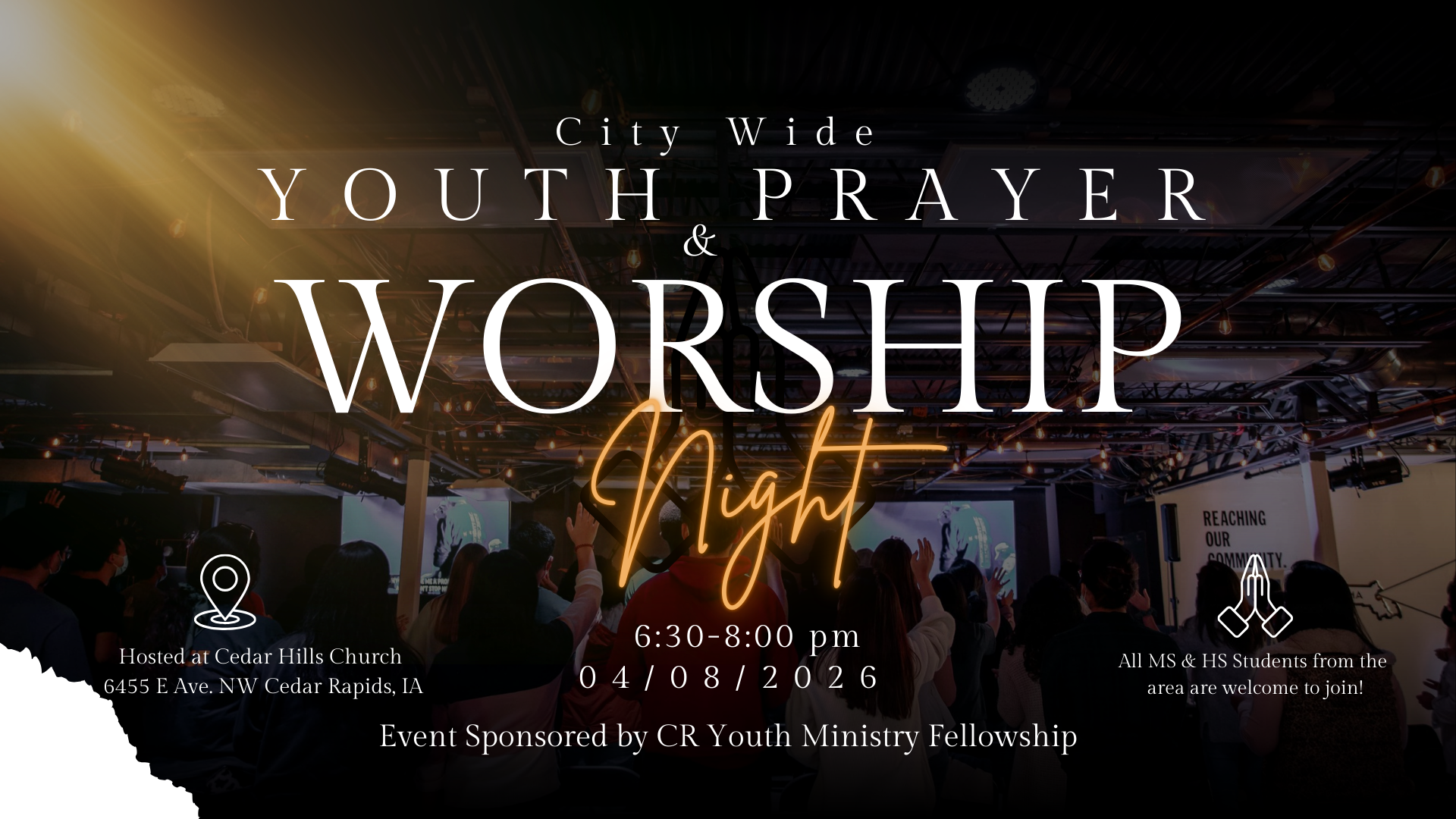
      Cedar Hills hosted the 4th annual youth prayer and worship night. Students (6th-12th grades) served as the tech team, led worship and shared testimonies about how their lives have been shaped by prayer.

      One student shared about how last year, at this event, she felt called to send a text inviting the girls on her track team to do a Bible study. What she imagined as a few girls grew to over a dozen! This Bible study has fueled a revival of the FCA program at her school, which was another answer to prayer!  Another student related how God met with them as they struggled with doubt and depression.  Students prayed together by following the ACTS model. Prayers of adoration, confession, thanksgiving and supplication were mixed with singing praises to God.

      The youth prayer & worship night is a testimony to what God is doing in the lives of young people around our city!  Youth are not just the future of the church, God is using them today! They are learning to use their gifts to serve others and glorify God, instead of just being consumers on the sidelines.  God is growing hearts of prayer and worship. God is equipping leaders. God is good!

      Steve Poole
      Pastor of Youth & Young Adults

      What did you think of this article? Did you laugh? Cry? Learn something new? Let Steve know below.

        The War Against Weeds

        The War Against Weeds

        Healthy things grow. That’s a basic truth and, usually, good news. But sometimes the healthiest thing in the garden appears to be the weeds. That’s not good. It means war. 

        The enemy of our souls, the great deceiver, wants to grow weeds in us and he wants us to settle for weeds so that we become satisfied with weedy souls in a weedy world.

        We are in a war. At stake are the hearts and minds of a generation. Generations. In this battle our greatest weapon is truth. Remember this truth: we are the kind of people who will not settle for weeds. We want fruit. Much fruit.

        Jesus said, “I am the true vine, and my Father is the gardener. He cuts off every branch in me that bears no fruit, while every branch that does bear fruit he prunes so that it will be even more fruitful.” (John 15:1-2).

        The healthy disciple is the one who bears much fruit. Healthy disciples are rooted in Jesus. Jesus is the vine, we are the branches. Our identity is rooted in Jesus. Healthy disciples are also relational. Disciples grow with other branches on a vine. We build bridges to others – we do not erect barriers. We speak the truth in love.

        Rooted and relational disciples become servant-hearted, humble, sacrificial, patient, kind, generous followers of Jesus who bear fruit. Hatred, prejudice, divisiveness, pride, envy, greed – these are weeds. Healthy disciples bear fruit not weeds.

        We are called to make disciples. This is a high calling. Healthy disciples will win the war against the evil one. This is our calling. It requires some pruning. And some weeding. We will not settle for less.

        May God help us,

        Kent Landhuis
        Pastor of Teaching & Leadership

        Did you enjoy this article? Did you laugh, cry or learn something new? Let Kent know.

          Abide In Jesus

          Abide in Jesus

          According to John 15, the key to bearing fruit is to abide in the vine Jesus said, “I am the vine; you are the branches. If you remain in me and I in you, you will bear much fruit; apart from me you can do nothing” (John 15:5).

          After a grape vine is pruned, vine vinedressers gently tie each vine to a trellis. The trellis is a structure that gives the vine support for the growing season ahead. By the end of the season, the trellis is vital to support branches heavy with grapes. 

          The pruned and tied vine takes on the shape of a cross. The cross is a symbol of humility, surrender, and obedience. The cross signifies a life shaped, not by self-will, but by God’s will. Like the vine bound to the trellis, the cross restrains us for the purpose of bearing fruit. 

          Intentional restraint is not punishment; it is formation. Spiritual practices become a trellis to shape us. Bible reading, prayer, journaling, fasting, Sabbath, community, solitude, generosity, witness – these practices form us. 

          When we feel a pull toward selfish ambition we are invited to take up the cross and follow (abide). Even though we have our own plans, we surrender to God’s plan.

          Our daily, weekly, and seasonal rhythms – habits, commitments, and practices – become the framework that keep us tethered to Christ. Without a trellis, a vine grows wildly, sprawling in every direction without purpose. Likewise, without intentional spiritual practices, we risk becoming entangled in the distractions and worries of life. 

          That is why we abide. And we who abide bear much fruit as we trust God to shape us.  Without a trellis to support our abiding, our lives sprawl. Out of control.  With structure, we thrive. Like a vine, we grow best when we have the right support in place.

          Here is a prompt for those of you who are using the structure of journaling: How can you form rhythms that support spiritual growth? 

          Spring is a great time to set up your trellis for the growing season ahead.

          May the Lord be with you,

          Kent Landhuis
          Pastor of Teaching & Leadership
          Did you enjoy this article? Did you laugh, cry or learn something new? Let Kent know.

            The Gospel Is Not Optional

            The Gospel is not Optional

            There is some debate about which season is more important: Christmas or Easter? Of course, we are the kind of people who believe that both are vital and neither is optional.

            But if you had to rank them, what would you say? Most theologians lean toward Easter because it represents the grand climax of the Gospel – Jesus lived and died and rose again. This is true and essential. 

            Some people claim that religion is obsolete because it does not work. And, I suppose, that depends on what a person expects religion to do. I’m thankful that the gospel never becomes obsolete. A recent blog by Russ Lackey explains why:

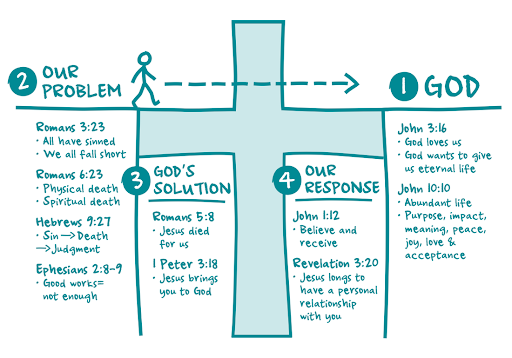
            The gospel does not exist to make people happier, nicer, or more functional. It announces something far stranger: that God justifies the ungodly. It declares forgiveness not as therapeutic reassurance but as a verdict spoken over people who cannot secure it for themselves.

            In a culture shaped by achievement, expressive individualism, and relentless self-optimization, this claim cannot be replaced. Wellness cultures still demand improvement. Therapeutic frameworks assume progress. Many contemporary spiritualities offer meaning without judgment and comfort without reckoning.

            The gospel does not do any of this. It names sin without collapsing into shame and announces forgiveness without requiring self-exoneration. No algorithm, mindfulness practice, or spiritual technique dares to absolve.

            This is why the gospel endures even when religion becomes optional. 

            Jesus lived and died and rose again. That truth never wears out and never loses its power. Praise God!

            Kent Landhuis
            Pastor of Teaching & Leadership

            To read more, go here: When Religion Becomes Obsolete, Christ Does Not. 

            Did you enjoy this article? Did you laugh, cry or learn something new? Let Kent know.

              Disciples Bear Fruit

              Disciples Bear Fruit

              Every congregation faces pressure to succeed. Success has historically been measured by the congregation’s budget and attendance. (Bucks and butts.) These measures might be helpful for a church management business. We are not in that business. We are in the disciple-making business. Jesus said, “Go make disciples” (Matthew 28:19). We measure success by making disciples. 

              I just read a blog about the tension between success (achievement) and fruitfulness. I found it helpful: “There’s a real difference between our achievements and our fruitfulness, between our successes and the actual good that we bring into the world. What we achieve brings us success… and gives us a feeling of being worthwhile, singular, and important. We’ve done something. We’ve left a mark. We’ve been recognized.” 

              Success is measured by achievement. Fruitfulness is measured differently: “Achievement is not the same thing as fruitfulness. Our achievements are things we have accomplished. Our fruitfulness is the positive, long-term effect these achievements have on others. Achievement doesn’t automatically mean fruitfulness.”

              Jesus never told us to achieve but he did tell us to bear fruit. “This is to my Father’s glory, that you bear much fruit, showing yourselves to be my disciples” (John 15:8).

              Jesus said, “I am the vine, you are the branches. The one who remains in Me and I in him produces much fruit, because you can do nothing without Me” (John 15:5).

              Jesus said, “You did not choose Me, but I chose you. I appointed you that you should go out and produce fruit and that your fruit should remain” (John 15:16).

              Jesus said, “You’ll recognize them by their fruit… every good tree produces good fruit, but a bad tree produces bad fruit” (Matthew 7:16-17).

              Disciples bear fruit – that is success. One last word from my blogger friend: “Fruit comes from abiding; success comes from striving. One is done to impress others, the other to bless others.”

              Go abide, bear fruit, and bless somebody.

              Kent Landhuis
              Pastor of Teaching & Leadership

              Did you enjoy this article? Did you laugh, cry or learn something new? Let Kent know.

                Ash Wednesday 2026

                Join us for Ash Wednesday at Cedar Hills –February 18. A meal will be served 5:15pm-6:15pm, with a short reflective worship service at 6:30pm.

                We will sing, reflect and receive the traditional mark of ash on our foreheads.

                We’ll continue to meet Wednesday nights for the season of Lent and will be studying the Sermon on the Mount.   Weekly meals 5:15-6:15pm with the worship service at 6:30pm.

                It helps us prepare if you can kindly RSVP to the meal on the weekly bulletin response.

                The Wednesday Prayer meeting will move from being online, to in person and will start immediately after these services, around 7:05pm and meet in the Resource Center.

                Thanksgiving Eve

                We like to celebrate Thanksgiving together the day before with a service of thanks and praise. This service is in the Gathering Space and family-friendly. We’ll sing, celebrate communion, and remember the reason why we give thanks!

                Wednesday, Nov. 26 at 6:30pm
                in the Gathering Space

                There is lots of space for families and kids to move around at this service.  It is generally light-hearted and multi-generational.