Category Archives: Cedar Blog

The War Against Weeds

The War Against Weeds

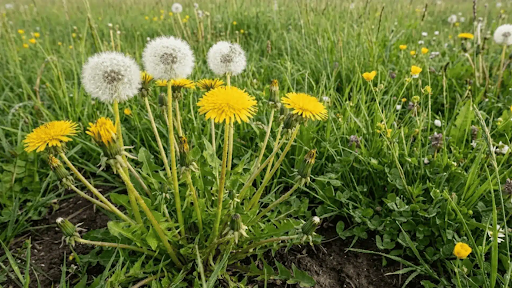
Healthy things grow. That’s a basic truth and, usually, good news. But sometimes the healthiest thing in the garden appears to be the weeds. That’s not good. It means war. 

The enemy of our souls, the great deceiver, wants to grow weeds in us and he wants us to settle for weeds so that we become satisfied with weedy souls in a weedy world.

We are in a war. At stake are the hearts and minds of a generation. Generations. In this battle our greatest weapon is truth. Remember this truth: we are the kind of people who will not settle for weeds. We want fruit. Much fruit.

Jesus said, “I am the true vine, and my Father is the gardener. He cuts off every branch in me that bears no fruit, while every branch that does bear fruit he prunes so that it will be even more fruitful.” (John 15:1-2).

The healthy disciple is the one who bears much fruit. Healthy disciples are rooted in Jesus. Jesus is the vine, we are the branches. Our identity is rooted in Jesus. Healthy disciples are also relational. Disciples grow with other branches on a vine. We build bridges to others – we do not erect barriers. We speak the truth in love.

Rooted and relational disciples become servant-hearted, humble, sacrificial, patient, kind, generous followers of Jesus who bear fruit. Hatred, prejudice, divisiveness, pride, envy, greed – these are weeds. Healthy disciples bear fruit not weeds.

We are called to make disciples. This is a high calling. Healthy disciples will win the war against the evil one. This is our calling. It requires some pruning. And some weeding. We will not settle for less.

May God help us,

Kent Landhuis
Pastor of Teaching & Leadership
Did you enjoy this article? Did you laugh, cry or learn something new? Let Kent know.

    Abide In Jesus

    Abide in Jesus

    According to John 15, the key to bearing fruit is to abide in the vine Jesus said, “I am the vine; you are the branches. If you remain in me and I in you, you will bear much fruit; apart from me you can do nothing” (John 15:5).

    After a grape vine is pruned, vine vinedressers gently tie each vine to a trellis. The trellis is a structure that gives the vine support for the growing season ahead. By the end of the season, the trellis is vital to support branches heavy with grapes. 

    The pruned and tied vine takes on the shape of a cross. The cross is a symbol of humility, surrender, and obedience. The cross signifies a life shaped, not by self-will, but by God’s will. Like the vine bound to the trellis, the cross restrains us for the purpose of bearing fruit. 

    Intentional restraint is not punishment; it is formation. Spiritual practices become a trellis to shape us. Bible reading, prayer, journaling, fasting, Sabbath, community, solitude, generosity, witness – these practices form us. 

    When we feel a pull toward selfish ambition we are invited to take up the cross and follow (abide). Even though we have our own plans, we surrender to God’s plan.

    Our daily, weekly, and seasonal rhythms – habits, commitments, and practices – become the framework that keep us tethered to Christ. Without a trellis, a vine grows wildly, sprawling in every direction without purpose. Likewise, without intentional spiritual practices, we risk becoming entangled in the distractions and worries of life. 

    That is why we abide. And we who abide bear much fruit as we trust God to shape us.  Without a trellis to support our abiding, our lives sprawl. Out of control.  With structure, we thrive. Like a vine, we grow best when we have the right support in place.

    Here is a prompt for those of you who are using the structure of journaling: How can you form rhythms that support spiritual growth? 

    Spring is a great time to set up your trellis for the growing season ahead.

    May the Lord be with you,

    Kent Landhuis
    Pastor of Teaching & Leadership

    Did you enjoy this article? Did you laugh, cry or learn something new? Let Kent know.

      The Gospel Is Not Optional

      The Gospel is not Optional

      There is some debate about which season is more important: Christmas or Easter? Of course, we are the kind of people who believe that both are vital and neither is optional.

      But if you had to rank them, what would you say? Most theologians lean toward Easter because it represents the grand climax of the Gospel – Jesus lived and died and rose again. This is true and essential. 

      Some people claim that religion is obsolete because it does not work. And, I suppose, that depends on what a person expects religion to do. I’m thankful that the gospel never becomes obsolete. A recent blog by Russ Lackey explains why:

      The gospel does not exist to make people happier, nicer, or more functional. It announces something far stranger: that God justifies the ungodly. It declares forgiveness not as therapeutic reassurance but as a verdict spoken over people who cannot secure it for themselves.

      In a culture shaped by achievement, expressive individualism, and relentless self-optimization, this claim cannot be replaced. Wellness cultures still demand improvement. Therapeutic frameworks assume progress. Many contemporary spiritualities offer meaning without judgment and comfort without reckoning.

      The gospel does not do any of this. It names sin without collapsing into shame and announces forgiveness without requiring self-exoneration. No algorithm, mindfulness practice, or spiritual technique dares to absolve.

      This is why the gospel endures even when religion becomes optional. 

      Jesus lived and died and rose again. That truth never wears out and never loses its power. Praise God!

      Kent Landhuis
      Pastor of Teaching & Leadership
      To read more, go here: When Religion Becomes Obsolete, Christ Does Not. 

      Did you enjoy this article? Did you laugh, cry or learn something new? Let Kent know.

        Deep Waters

        Deep Waters

        It is said that water covers about 71% of the Earth’s surface, and only 3% of it is fresh, with much of that locked in ice. Isn’t that interesting? There is no doubt that water is vital and essential for our overall well-being. Doctors often remind us that drinking enough water keeps us hydrated.

        In Genesis 1:6, it says, “And God said, ‘Let there be a vault between the waters to separate water from water.’” Then in verse 7, “So God made the vault and separated the water under the vault from the water above it.”

        I don’t know about you, but I cannot swim. Ironically, though, I really enjoy being in the water–just not deep water. My fear is that the waves and tides might sweep me away. I always get nervous about going too deep because I don’t know what lies ahead. This tension between the fear and love for water is something I have lived with my entire life.

        But what if I told you that God sometimes calls us into deeper waters–not so we can drown, but so we can rise above the waves and tides? As I have matured in my faith, I see God calling me into even deeper waters. Isaiah 43:2 reminds us, “When you pass through the waters, I will be with you; and when you pass through the rivers, they will not sweep over you.” This assurance from God is both calming and, at times, a little frightening.

        Maybe you’re like me and feel God calling you into deeper waters. For me, it has meant walking by faith and not by sight remembering that the same God who made the waters will see me through to the other side. I have had to lay my fears of deep waters at His feet and embark on the journey.

        Being in deep water has brought a sense of awe and even excitement. I am reminded that no matter how high the waves and tides rise, God is with me.

        Frankline “Franky” Tshombe
        Children’s Church Leader

        Did you enjoy this article? Did you laugh, cry, or learn something new?  Let Frankline know.

          Disciples Bear Fruit

          Disciples Bear Fruit

          Every congregation faces pressure to succeed. Success has historically been measured by the congregation’s budget and attendance. (Bucks and butts.) These measures might be helpful for a church management business. We are not in that business. We are in the disciple-making business. Jesus said, “Go make disciples” (Matthew 28:19). We measure success by making disciples. 

          I just read a blog about the tension between success (achievement) and fruitfulness. I found it helpful: “There’s a real difference between our achievements and our fruitfulness, between our successes and the actual good that we bring into the world. What we achieve brings us success… and gives us a feeling of being worthwhile, singular, and important. We’ve done something. We’ve left a mark. We’ve been recognized.” 

          Success is measured by achievement. Fruitfulness is measured differently: “Achievement is not the same thing as fruitfulness. Our achievements are things we have accomplished. Our fruitfulness is the positive, long-term effect these achievements have on others. Achievement doesn’t automatically mean fruitfulness.”

          Jesus never told us to achieve but he did tell us to bear fruit. “This is to my Father’s glory, that you bear much fruit, showing yourselves to be my disciples” (John 15:8).

          Jesus said, “I am the vine, you are the branches. The one who remains in Me and I in him produces much fruit, because you can do nothing without Me” (John 15:5).

          Jesus said, “You did not choose Me, but I chose you. I appointed you that you should go out and produce fruit and that your fruit should remain” (John 15:16).

          Jesus said, “You’ll recognize them by their fruit… every good tree produces good fruit, but a bad tree produces bad fruit” (Matthew 7:16-17).

          Disciples bear fruit – that is success. One last word from my blogger friend: “Fruit comes from abiding; success comes from striving. One is done to impress others, the other to bless others.”

          Go abide, bear fruit, and bless somebody.

          Kent Landhuis
          Pastor of Teaching & Leadership

          Did you enjoy this article? Did you laugh, cry or learn something new? Let Kent know.

            Disciples Making Disciples

            Disciples Making Disciples

            How often do you think about discipleship? How much of your ambition is aimed at becoming a better disciple of Jesus? How much time do you invest in training to be like Jesus?

            As a congregation we describe our mission as making disciples who make disciples. We set out this year to abide with Jesus as essential to growing. Jesus said, “Apart from me you can do nothing.” (John 15) We are the kind of people who focus less on lesser things and more on greater things – the greatest thing we can focus on is to become more like Jesus.

            The New Testament uses the word ‘disciple’ 273 times. Jesus talks about making disciples constantly. So, how are we doing? This question actually boils down to another: How are you doing? 

            To discover more about your journey and to dig deeper into discipleship I recommend this wonderful sermon by Jon Tyson. 

            Blessings as you grow.

            Kent Landhuis
            Pastor of Teaching & Leadership

            Did you enjoy this article? Did you laugh, cry or learn something new? Let Kent know.

              We Are the Kind of People Who Keep Growing

              We Are the Kind of People Who Keep Growing

              I saw a news flash today that RFK Jr, age 71, completed 50 pull-ups and 100 push-ups in under six minutes. I thought, “How is that possible?”

              Answer: RFK Jr. apparently still works out. A lot. He is the kind of guy who keeps growing physically. 

              If growing physically strong and healthy requires continued effort, what about spiritual growth?

              We are the kind of people who keep growing spiritually. We keep discovering new truths. We keep drawing near to God. We keep following Jesus into new territory. 

              We know that healthy things grow. Here are three reasons why we are the kind of people who keep growing:

              1. God said, “Draw near to me and I will draw near to you.” (James 4:8)
              2. Jesus said, “Abide in me and you will bear much fruit.” (John 15:1-5)
              3. We are called to learn and share God’s truths every day “When we rise up and when we lie down, when we sit at home and and when we walk along the way.” (Deuteronomy 6:6-8)

              And if that is not motivation enough, remember that God’s Word is not static or stale, it is “living and active.” (Hebrews 4:12) God is still working today – in all of us – to bring not just life, but abundant life. (John 10:10) So, keep growing. 

              As Steve shared in his sermon last week, practice “Shema-ing” in a Sunday class, small group, or in your personal Bible Study.  LISTEN HERE

              May the Lord be with you,
              Kent Landhuis
              Pastor of Teaching & Leadership

              Did you enjoy this article? Let Kent know.

                Why a Sunday Class?

                Why Should I Participate in Sunday Classes?

                Healthy things grow. We are the kind of people who believe that Sunday classes are one of the steps God uses to grow our faith. Growth is good. Stagnation is bad. 2 Peter 3:18 says, Grow in the grace and knowledge of our Lord and Savior Jesus Christ. 

                When we grow in our Biblical knowledge and understanding we see very specific benefits. The primary benefits is to grow in love: to love God more fully and to love others more boldly. Here are three additional benefits: 

                1. Resilience is better than anxiety. Stand firm then, with the belt of truth buckled around your waist. (Ephesians 6:14a) Stand firm in all the will of God, mature and fully assured. (Colossians 4:12b)
                2. Discernment is better than deception. Then we will no longer be infants, tossed back and forth by the waves, and blown here and there by every wind of teaching and by the cunning and craftiness of people in their deceitful scheming. (Ephesians 4:14)
                3. Relationship is better than isolation. I am the vine; you are the branches. If you remain in me and I in you, you will bear much fruit; apart from me you can do nothing. (John 15:5) By this everyone will know that you are my disciples, if you love one another. (John 13:35)

                What steps are you taking to grow your faith? 

                Let us move beyond the elementary teachings about Christ and be taken forward to maturity. (Hebrews 6:1)

                Kent Landhuis
                Pastor of Teaching & Leadership

                Did you enjoy this article? Did you laugh, cry or learn something new? Let Kent know.

                  In Process

                  In Process

                  I’m regularly apologizing for the state of my garden. In early spring, I say, “It is just getting started.” Later, I say, “It will look better in a few weeks.” In the middle of summer, I say, “It needs some weeds pulled.” Late in the season, I say, “It is past its prime.” Or, I say, “Wait till next year, it will be much better.”

                  My garden is always in process. Here is a photo taken last night. It will probably look better next week. Like the church. Like my life. In process.

                  The book The Story of Reality, by Greg Koukl, explains that living “in process” is part of our worldview as people who follow Jesus. Our “in process” comes in four stages: Creation (How things began), Fall (How things got broken), Redemption (How things will get fixed), and Restoration (How things will be once they are fixed).

                  Every worldview must account for these four stages. We account for them this way: 

                  1. How did things begin? God made the world and called it good. 
                  2. How did things get broken? Rebellion against God. (Weeds)
                  3. How will things get fixed? Jesus makes all things new. 
                  4. How will things look once fixed? All things good again in God’s Kingdom.

                  This worldview is good news for anyone who has ever been abused, oppressed, or mistreated. It is good news for anyone who has ever had grief, or pain, or trauma. It means that all that is broken can be fixed. All injustice can be made just. All grief can be healed. All sin can be forgiven.

                  Jesus obeyed perfectly and died a horrifying death to take on the rebellion of the world. Jesus was raised from the dead, and whoever puts their trust in Jesus as their Savior will be made right with God and live in God’s Kingdom now and forever. 

                  For those who trust in Jesus, he will one day wipe away every tear. One day. Until that day, we are “in process” because we live in the tension between the “now” and the “not yet” of God’s Kingdom. Like a garden, “It will look better in a few weeks.”

                  Kent Landhuis
                  Pastor of Teaching & Leadership

                  Did you enjoy this article? Did you laugh, cry or learn something new? Let Kent know.

                    We Are Chosen

                    God is Working Hard (pt. 3)

                    (read part 1) (read part 2)

                    In gym class, I was always relieved when chosen. (Particularly if not chosen last.)

                    In Guatemala, we give goodies to the kids who show up at our work sites. A doll, a cap, a granola bar, matchbox cars, candy. 

                    Once word gets out, the number of kids grows rapidly. Some of those kids are very timid. They lurk around the edges, waiting to see if they will be chosen to receive a gift. When we invite them to receive a gift, they smile.

                    Last week, two little girls, Madelyn and Astrid, from Guatemala chose Mary and me. Madelyn said she picked us because we “seemed kind, friendly, and nice.” She was probably looking at Mary.

                    The Bible tells us how God chooses people to be his people: “God, your God, chose you out of all the people on Earth for himself as a cherished, personal treasure.

                    God wasn’t attracted to you and didn’t choose you because you were big and important—the fact is, there was almost nothing to you. He did it out of sheer love, keeping the promise he made to your ancestors.” (Deuteronomy 7:6-8, MSG)

                    I’m glad to be chosen. Being chosen makes all the difference. Jesus said, “I no longer call you slaves, because a master doesn’t confide in his slaves. Now you are my friends, since I have told you everything the Father told me. You didn’t choose me. I chose you.”  (John 15:15-16, NLT)

                    We are chosen!

                    Kent Landhuis
                    Pastor of Teaching & Leadership

                    Did you enjoy this article? Did you laugh, cry or learn something new? Let Kent know.