Journal Prompts

Spend 5 minutes each week speaking with God and listening to His response these questions.

Week 13 (April 26) – What prevents me from getting deeper rest?

Week 12 (April 19) – When you stop ‘doing’, what feelings, worries and doubts do you experience?

Week 11 (April 12)What prevents me from getting peaceful rest?

Week 10 (April 5) –  How does the resurrection of Jesus give me hope where I need it most?

Week 9 (March 29) – How am I living out my purpose, calling and identity in Christ?  What does it look like to offer myself as a living sacrifice?

Week 8 (March 22) – What is my usual response/behavior when I am frustrated?

Week 7 (March 15) – What desires control me? What clutters my soul?

Week 6 (March 8) – What passion is God stirring in your heart as you fast this week?  Why haven’t I seen God’s power do ________?

Week 5 (March 1) – What does it mean to offer my body as a living sacrifice?

Week 4 (February 22)- How do I react to the invitation to fast?
Skip a meal and then journal. What happened? (If I did not skip a meal, journal about why I did not.)

Week 3 (February 15 )– Where have you seen friction (suffering) transform you in a positive way?

Week 2 (February 8) – What is the relationship between abiding, loving, obeying, and bearing fruit in your life?

Week 1 (February 1) – Where am I reluctant or resistant to change?

Youth Prayer and Worship Night

Youth Prayer and Worship Night

Cedar Hills hosted the 4th annual youth prayer and worship night. Students (6th-12th grades) served as the tech team, led worship and shared testimonies about how their lives have been shaped by prayer.

One student shared about how last year, at this event, she felt called to send a text inviting the girls on her track team to do a Bible study. What she imagined as a few girls grew to over a dozen! This Bible study has fueled a revival of the FCA program at her school, which was another answer to prayer!  Another student related how God met with them as they struggled with doubt and depression.  Students prayed together by following the ACTS model. Prayers of adoration, confession, thanksgiving and supplication were mixed with singing praises to God.

The youth prayer & worship night is a testimony to what God is doing in the lives of young people around our city!  Youth are not just the future of the church, God is using them today! They are learning to use their gifts to serve others and glorify God, instead of just being consumers on the sidelines.  God is growing hearts of prayer and worship. God is equipping leaders. God is good!

Steve Poole
Pastor of Youth & Young Adults

What did you think of this article? Did you laugh? Cry? Learn something new? Let Steve know below.

    The War Against Weeds

    The War Against Weeds

    Healthy things grow. That’s a basic truth and, usually, good news. But sometimes the healthiest thing in the garden appears to be the weeds. That’s not good. It means war. 

    The enemy of our souls, the great deceiver, wants to grow weeds in us and he wants us to settle for weeds so that we become satisfied with weedy souls in a weedy world.

    We are in a war. At stake are the hearts and minds of a generation. Generations. In this battle our greatest weapon is truth. Remember this truth: we are the kind of people who will not settle for weeds. We want fruit. Much fruit.

    Jesus said, “I am the true vine, and my Father is the gardener. He cuts off every branch in me that bears no fruit, while every branch that does bear fruit he prunes so that it will be even more fruitful.” (John 15:1-2).

    The healthy disciple is the one who bears much fruit. Healthy disciples are rooted in Jesus. Jesus is the vine, we are the branches. Our identity is rooted in Jesus. Healthy disciples are also relational. Disciples grow with other branches on a vine. We build bridges to others – we do not erect barriers. We speak the truth in love.

    Rooted and relational disciples become servant-hearted, humble, sacrificial, patient, kind, generous followers of Jesus who bear fruit. Hatred, prejudice, divisiveness, pride, envy, greed – these are weeds. Healthy disciples bear fruit not weeds.

    We are called to make disciples. This is a high calling. Healthy disciples will win the war against the evil one. This is our calling. It requires some pruning. And some weeding. We will not settle for less.

    May God help us,

    Kent Landhuis
    Pastor of Teaching & Leadership

    Did you enjoy this article? Did you laugh, cry or learn something new? Let Kent know.

      Graduate Recognition


      GRADUATE RECOGNITION
      – We love our grads and want to recognize all the hard work they have put in! Whether high school, college, grad school or a certificate program, if you’ve completed something in the last year, we want to recognize you in the services on Sunday, May 17.

      Kindly fill out this information form by Sunday, May 10.

      SUBMIT YOUR INFO

      Church Picnic May 17


      CHURCH PICNIC – 
      Join us for an evening of fun at Cherry Hill park Sunday, May 17.   We’ll be providing the meat and drinks. Bring a side to share and meet us at the park pavilion around 5:30pm.

      Bring a baseball glove or two! Lawn chairs, yard games… whatever you want!

      Abide In Jesus

      Abide in Jesus

      According to John 15, the key to bearing fruit is to abide in the vine Jesus said, “I am the vine; you are the branches. If you remain in me and I in you, you will bear much fruit; apart from me you can do nothing” (John 15:5).

      After a grape vine is pruned, vine vinedressers gently tie each vine to a trellis. The trellis is a structure that gives the vine support for the growing season ahead. By the end of the season, the trellis is vital to support branches heavy with grapes. 

      The pruned and tied vine takes on the shape of a cross. The cross is a symbol of humility, surrender, and obedience. The cross signifies a life shaped, not by self-will, but by God’s will. Like the vine bound to the trellis, the cross restrains us for the purpose of bearing fruit. 

      Intentional restraint is not punishment; it is formation. Spiritual practices become a trellis to shape us. Bible reading, prayer, journaling, fasting, Sabbath, community, solitude, generosity, witness – these practices form us. 

      When we feel a pull toward selfish ambition we are invited to take up the cross and follow (abide). Even though we have our own plans, we surrender to God’s plan.

      Our daily, weekly, and seasonal rhythms – habits, commitments, and practices – become the framework that keep us tethered to Christ. Without a trellis, a vine grows wildly, sprawling in every direction without purpose. Likewise, without intentional spiritual practices, we risk becoming entangled in the distractions and worries of life. 

      That is why we abide. And we who abide bear much fruit as we trust God to shape us.  Without a trellis to support our abiding, our lives sprawl. Out of control.  With structure, we thrive. Like a vine, we grow best when we have the right support in place.

      Here is a prompt for those of you who are using the structure of journaling: How can you form rhythms that support spiritual growth? 

      Spring is a great time to set up your trellis for the growing season ahead.

      May the Lord be with you,

      Kent Landhuis
      Pastor of Teaching & Leadership

      Did you enjoy this article? Did you laugh, cry or learn something new? Let Kent know.

        The Gospel Is Not Optional

        The Gospel is not Optional

        There is some debate about which season is more important: Christmas or Easter? Of course, we are the kind of people who believe that both are vital and neither is optional.

        But if you had to rank them, what would you say? Most theologians lean toward Easter because it represents the grand climax of the Gospel – Jesus lived and died and rose again. This is true and essential. 

        Some people claim that religion is obsolete because it does not work. And, I suppose, that depends on what a person expects religion to do. I’m thankful that the gospel never becomes obsolete. A recent blog by Russ Lackey explains why:

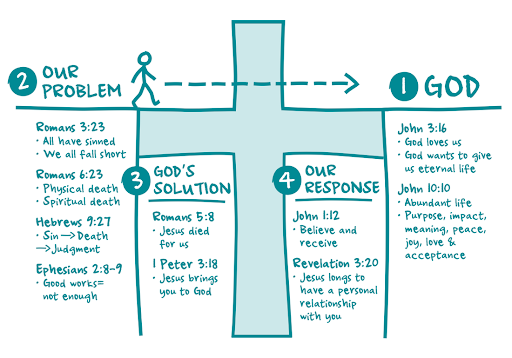
        The gospel does not exist to make people happier, nicer, or more functional. It announces something far stranger: that God justifies the ungodly. It declares forgiveness not as therapeutic reassurance but as a verdict spoken over people who cannot secure it for themselves.

        In a culture shaped by achievement, expressive individualism, and relentless self-optimization, this claim cannot be replaced. Wellness cultures still demand improvement. Therapeutic frameworks assume progress. Many contemporary spiritualities offer meaning without judgment and comfort without reckoning.

        The gospel does not do any of this. It names sin without collapsing into shame and announces forgiveness without requiring self-exoneration. No algorithm, mindfulness practice, or spiritual technique dares to absolve.

        This is why the gospel endures even when religion becomes optional. 

        Jesus lived and died and rose again. That truth never wears out and never loses its power. Praise God!

        Kent Landhuis
        Pastor of Teaching & Leadership

        To read more, go here: When Religion Becomes Obsolete, Christ Does Not. 

        Did you enjoy this article? Did you laugh, cry or learn something new? Let Kent know.

          Love. Belong. Serve.